Sunday, March 10, 2013

BW11: Hugo Chavez

Hugo Chavez
You'll have to forgive me but I've been totally enthralled reading Tana French's The Likeness.  Friday, when I should have been researching and typing up this week's post, I was lost in the Irish countryside.   Saturday, when I should have been refining and finishing the post, I was reading instead. It's at the exciting part, but I should be writing a post.  Just another chapter.    But the post...  I'm at a loss.  Yes, we are currently traveling virtually and book wise through South America and I should be able to find some interesting non fiction books.  But I've left it too late and there are far too many choices. 

Since we are armchair traveling through Venezuela and the big news this week is the death of Hugo Chavez, thought I could share some books  about him and his country.  But since I avoid discussing politics like the plague, the question is do I really want to highlight him.  Nothing else comes to mine and It's approaching dinner time and a few more chapters to go.  Sussed out ones that were neutral (hopefully) and give the best picture.  His vice president, Nicolos Maduro has succeeded him until an official election which will take place April 14th.

Hugo by Bart Jones
History of Venezuela by H. Michael Tarver
Chavez by Aleida Guevara
Three's a good number right?     It's time to cook dinner and they are at an oh my god moment. 15 more minutes, then I'll start cooking.  I'm getting 'mom i'm hungry' and the cats are meowing and being annoying and ......

Dinner's done,kid's in the bath, hubby's on facebook, I can finally finish those last three chapters.  Sigh.....   You love me, so I know you'll forgive me.  After all, I was reading.


***********************************************************************
Link to your reviews:    Please link to your specific book review post and not your general blog link. In the Your Name field, type in your name and the name of the book in parenthesis. In the Your URL field leave a link to your specific post. If you don't have a blog, tell us about the books you are reading in the comment section of this post. 

Sunday, March 3, 2013

BW10: Gadding about South America

Courtesy World Atlas.com

Where has the time gone? It's March and spring is around the corner. If you've been doing the Continental Challenge, the first couple months of armchair traveling has taken us down through Canada and across the Unites States.  I spent quite a bit of time hanging about the east coast, hiked part of the way up the Appalachian trail, meandered my way over to the west coast and baked into the deserts of California.   I'm ready to head down through South America and see what there is to discover.  Currently in my backpack is Hopscotch by Argentinian novelist Julio Cortazar and  The House of the Spirits by Chilean born author Isabel Allende. I'll surely discover more interesting authors and stories as wind my way down through the continent.

If you click on the Traipse through South America link in the linkbar up above, you'll find a couple books from each country (thank you Goodreads) based on setting that seemed interesting and will get you started if you don't know where to begin.  Wide Open Education lists the 20 Essential Works of Latin America Literature which includes  Pablo Neruda, Gabriel Garcia Marquez, Isabel Allende and Julio Cortazar.  And to torture you some more,  Becca of Lost in Books has been doing a fabulous Take me Away series highlighting books from different countries and has so far done Argentina, Brazil, Chili, and Peru, that will have you adding more books to your wishlist.

Are you ready for a challenging readalong.  I am going to tackle reading Hopscotch first and a few 52 Bookers over on the Well Trained Mind forums will be joining in.  Readalong with us starting March 10th: 


Synopsis:  Horacio Oliveira is an Argentinian writer who lives in Paris with his mistress, La Maga, surrounded by a loose-knit circle of bohemian friends who call themselves "the Club." A child's death and La Maga's disappearance put an end to his life of empty pleasures and intellectual acrobatics, and prompt Oliveira to return to Buenos Aires, where he works by turns as a salesman, a keeper of a circus cat which can truly count, and an attendant in an insane asylum. Hopscotch is the dazzling, free-wheeling account of Oliveira's astonishing adventures.
And by free-wheeling, they mean a stream of consciousness book in which you can read in chapter order or follow the random pattern set out by the author.  Same as the title, you will be Hopscotching around. According to the Quarterly Conversation:


The most remarked-on aspect of Hopscotch is its format: the book is split into 56 regular chapters and 99 “expendable” ones. Readers may read straight through the regular chapters (ignoring the expendable ones) or follow numbers left at the end of each chapter telling the reader which one to read next (eventually taking her through all but one of the chapters). A reading of the book in that way would lead the reader thus: Chapter 73 – 1 – 2 – 116 – 3 – 84 – 4 – 71 – 5 – 81 – 74 – 6 – 7- 8, and so on. -

So be prepared to set aside all expectations, take your time, have a glass of wine or two and enjoy.  I intend to.


************************************************************
Link to your reviews:    Please link to your specific book review post and not your general blog link. In the Your Name field, type in your name and the name of the book in parenthesis. In the Your URL field leave a link to your specific post. If you don't have a blog, tell us about the books you are reading in the comment section of this post.


Sunday, February 24, 2013

BW9: Book news

Oscar Statuettes
OSCARS


I don't go out to the theater any more preferring to wait until movies come out in DVD so I can watch them in the privacy of my own home. And I don't watch much live television so miss all the commercials for upcoming releases.  Which is why I enjoy watching the Oscars and finding out about the offerings out there.  This year six of the nine  best picture nominees were inspired by books or plays or news articles.  The movie Argo is based on a article from Wired magazine and  Juicy and Delicious was inspired by a one act play by Lucy Alibar. So be sure to check out the Oscars tonight and then read the books.


Oscars 2013 - Life of Pi - Yann Martel
Life of Pi by Yann Martel


Les Miserable by Victor Hugo

Team of Rivals by Doris Goodwin
 
Silver Linings Playbook by Matthew Quick


In other bookish news CSPAN's The First Ladies of the United States has been published to go along with their television series: First Ladies: Influence and Image about the lives of the first ladies which will run for two seasons and begins weekly on Monday, February 25th.  


    The series will cover

  • the first ladies' White House years
  • the interests they championed
  • their policy influences on the presidents
  • their stewardship of the White House
  • their approach to private and public life
 
The 90-minute programs will air live Mondays at 9 pm ET on C-SPAN and C-SPAN3 (which also is the home for American History TV on the weekends), C-SPAN Radio, and via livestreaming on c-span.org.
  *****************************************************************
Link to your reviews:    Please link to your specific book review post and not your general blog link. In the Your Name field, type in your name and the name of the book in parenthesis. In the Your URL field leave a link to your specific post. If you don't have a blog, tell us about the books you are reading in the comment section of this post.

Sunday, February 17, 2013

BW8: WEM - Jane Eyre by Charlotte Bronte


The 6th book in Susan Wise Bauer's Well Educated Mind great fiction reads is Jane Eyre by Charlotte Bronte.  The book was originally released under the name of Currer Bell in order to protect her and her sisters identities and because women authors weren't looked upon kindly at that particular period of time. 


"Averse to personal publicity, we veiled our own names under those of Currer, Ellis, and Acton Bell; the ambiguous choice being dictated by a sort of conscientious scruple at assuming Christian names positively masculine, while we did not like to declare ourselves women, because — without at that time suspecting that our mode of writing and thinking was not what is called 'feminine' — we had a vague impression that authoresses are liable to be looked on with prejudice . . . [quoted from the Norton edition of Wuthering Heights, p. 4]


Chapter One

There was no possibility of taking a walk that day.  We had been wandering, indeed, in the leafless shrubbery an hour in the morning; but since dinner (Mrs. Reed, when there was no company, dined early) the cold winter wind had brought with it clouds so sombre, and a rain so penetrating, that further out-door exercise was now out of the question.

I was glad of it: I never liked long walks, especially on chilly afternoons: dreadful to me was the coming home in the raw twilight, with nipped fingers and toes, and a heart saddened by the chidings of Bessie, the nurse, and humbled by the consciousness of my physical inferiority to Eliza, John, and Georgiana Reed.

The said Eliza, John, and Georgiana were now clustered round their mama in the drawing-room: she lay reclined on a sofa by the fireside, and with her darlings about her (for the time neither quarrelling nor crying) looked perfectly happy.  Me, she had dispensed from joining the group; saying, “She regretted to be under the necessity of keeping me at a distance; but that until she heard from Bessie, and could discover by her own observation, that I was endeavouring in good earnest to acquire a more sociable and childlike disposition, a more attractive and sprightly manner—something lighter, franker, more natural, as it were—she really must exclude me from privileges intended only for contented, happy, little children.”

“What does Bessie say I have done?” I asked.

“Jane, I don’t like cavillers or questioners; besides, there is something truly forbidding in a child taking up her elders in that manner.  Be seated somewhere; and until you can speak pleasantly, remain silent.”

A breakfast-room adjoined the drawing-room, I slipped in there.  It contained a bookcase: I soon possessed myself of a volume, taking care that it should be one stored with pictures.  I mounted into the window-seat: gathering up my feet, I sat cross-legged, like a Turk; and, having drawn the red moreen curtain nearly close, I was shrined in double retirement.

Folds of scarlet drapery shut in my view to the right hand; to the left were the clear panes of glass, protecting, but not separating me from the drear November day.  At intervals, while turning over the leaves of my book, I studied the aspect of that winter afternoon.  Afar, it offered a pale blank of mist and cloud; near a scene of wet lawn and storm-beat shrub, with ceaseless rain sweeping away wildly before a long and lamentable blast.

I returned to my book—Bewick’s History of British Birds: the letterpress thereof I cared little for, generally speaking; and yet there were certain introductory pages that, child as I was, I could not pass quite as a blank.  They were those which treat of the haunts of sea-fowl; of “the solitary rocks and promontories” by them only inhabited; of the coast of Norway, studded with isles from its southern extremity, the Lindeness, or Naze, to the North Cape—
“Where the Northern Ocean, in vast whirls,
Boils round the naked, melancholy isles
Of farthest Thule; and the Atlantic surge
Pours in among the stormy Hebrides.”
Nor could I pass unnoticed the suggestion of the bleak shores of Lapland, Siberia, Spitzbergen, Nova Zembla, Iceland, Greenland, with “the vast sweep of the Arctic Zone, and those forlorn regions of dreary space,—that reservoir of frost and snow, where firm fields of ice, the accumulation of centuries of winters, glazed in Alpine heights above heights, surround the pole, and concentre the multiplied rigours of extreme cold.”  Of these death-white realms I formed an idea of my own: shadowy, like all the half-comprehended notions that float dim through children’s brains, but strangely impressive.  The words in these introductory pages connected themselves with the succeeding vignettes, and gave significance to the rock standing up alone in a sea of billow and spray; to the broken boat stranded on a desolate coast; to the cold and ghastly moon glancing through bars of cloud at a wreck just sinking.

I cannot tell what sentiment haunted the quite solitary churchyard, with its inscribed headstone; its gate, its two trees, its low horizon, girdled by a broken wall, and its newly-risen crescent, attesting the hour of eventide.

The two ships becalmed on a torpid sea, I believed to be marine phantoms.

The fiend pinning down the thief’s pack behind him, I passed over quickly: it was an object of terror.

So was the black horned thing seated aloof on a rock, surveying a distant crowd surrounding a gallows.
Each picture told a story; mysterious often to my undeveloped understanding and imperfect feelings, yet ever profoundly interesting: as interesting as the tales Bessie sometimes narrated on winter evenings, when she chanced to be in good humour; and when, having brought her ironing-table to the nursery hearth, she allowed us to sit about it, and while she got up Mrs. Reed’s lace frills, and crimped her nightcap borders, fed our eager attention with passages of love and adventure taken from old fairy tales and other ballads; or (as at a later period I discovered) from the pages of Pamela, and Henry, Earl of Moreland.

With Bewick on my knee, I was then happy: happy at least in my way.  I feared nothing but interruption, and that came too soon.  The breakfast-room door opened.

“Boh!  Madam Mope!” cried the voice of John Reed; then he paused: he found the room apparently empty.

 “Where the dickens is she!” he continued.  “Lizzy!  Georgy! (calling to his sisters) Joan is not here: tell mama she is run out into the rain—bad animal!”

“It is well I drew the curtain,” thought I; and I wished fervently he might not discover my hiding-place: nor would John Reed have found it out himself; he was not quick either of vision or conception; but Eliza just put her head in at the door, and said at once—

“She is in the window-seat, to be sure, Jack.”

And I came out immediately, for I trembled at the idea of being dragged forth by the said Jack.

“What do you want?” I asked, with awkward diffidence.

“Say, ‘What do you want, Master Reed?’” was the answer.  “I want you to come here;” and seating himself in an arm-chair, he intimated by a gesture that I was to approach and stand before him.

John Reed was a schoolboy of fourteen years old; four years older than I, for I was but ten: large and stout for his age, with a dingy and unwholesome skin; thick lineaments in a spacious visage, heavy limbs and large extremities.  He gorged himself habitually at table, which made him bilious, and gave him a dim and bleared eye and flabby cheeks.  He ought now to have been at school; but his mama had taken him home for a month or two, “on account of his delicate health.”  Mr. Miles, the master, affirmed that he would do very well if he had fewer cakes and sweetmeats sent him from home; but the mother’s heart turned from an opinion so harsh, and inclined rather to the more refined idea that John’s sallowness was owing to over-application and, perhaps, to pining after home.

John had not much affection for his mother and sisters, and an antipathy to me.  He bullied and punished me; not two or three times in the week, nor once or twice in the day, but continually: every nerve I had feared him, and every morsel of flesh in my bones shrank when he came near.  There were moments when I was bewildered by the terror he inspired, because I had no appeal whatever against either his menaces or his inflictions; the servants did not like to offend their young master by taking my part against him, and Mrs. Reed was blind and deaf on the subject: she never saw him strike or heard him abuse me, though he did both now and then in her very presence, more frequently, however, behind her back.

Habitually obedient to John, I came up to his chair: he spent some three minutes in thrusting out his tongue at me as far as he could without damaging the roots: I knew he would soon strike, and while dreading the blow, I mused on the disgusting and ugly appearance of him who would presently deal it.  I wonder if he read that notion in my face; for, all at once, without speaking, he struck suddenly and strongly.  I tottered, and on regaining my equilibrium retired back a step or two from his chair.

“That is for your impudence in answering mama awhile since,” said he, “and for your sneaking way of getting behind curtains, and for the look you had in your eyes two minutes since, you rat!”

Accustomed to John Reed’s abuse, I never had an idea of replying to it; my care was how to endure the blow which would certainly follow the insult.

“What were you doing behind the curtain?” he asked.

“I was reading.”

“Show the book.”

I returned to the window and fetched it thence.

“You have no business to take our books; you are a dependent, mama says; you have no money; your father left you none; you ought to beg, and not to live here with gentlemen’s children like us, and eat the same meals we do, and wear clothes at our mama’s expense.  Now, I’ll teach you to rummage my bookshelves: for they are mine; all the house belongs to me, or will do in a few years.  Go and stand by the door, out of the way of the mirror and the windows.”

I did so, not at first aware what was his intention; but when I saw him lift and poise the book and stand in act to hurl it, I instinctively started aside with a cry of alarm: not soon enough, however; the volume was flung, it hit me, and I fell, striking my head against the door and cutting it.  The cut bled, the pain was sharp: my terror had passed its climax; other feelings succeeded.

“Wicked and cruel boy!” I said.  “You are like a murderer—you are like a slave-driver—you are like the Roman emperors!”

I had read Goldsmith’s History of Rome, and had formed my opinion of Nero, Caligula, &c.  Also I had drawn parallels in silence, which I never thought thus to have declared aloud.

“What! what!” he cried.  “Did she say that to me?  Did you hear her, Eliza and Georgiana?  Won’t I tell mama? but first—”

He ran headlong at me: I felt him grasp my hair and my shoulder: he had closed with a desperate thing.  I really saw in him a tyrant, a murderer.  I felt a drop or two of blood from my head trickle down my neck, and was sensible of somewhat pungent suffering: these sensations for the time predominated over fear, and I received him in frantic sort.  I don’t very well know what I did with my hands, but he called me “Rat!  Rat!” and bellowed out aloud.  Aid was near him: Eliza and Georgiana had run for Mrs. Reed, who was gone upstairs: she now came upon the scene, followed by Bessie and her maid Abbot.  We were parted: I heard the words—

“Dear! dear!  What a fury to fly at Master John!”

“Did ever anybody see such a picture of passion!”

Then Mrs. Reed subjoined—

“Take her away to the red-room, and lock her in there.”  Four hands were immediately laid upon me, and I was borne upstairs.


 Read more online here or here
*************************************************************************
 Link to your reviews:    Please link to your specific book review post and not your general blog link. In the Your Name field, type in your name and the name of the book in parenthesis. In the Your URL field leave a link to your specific post. If you don't have a blog, tell us about the books you are reading in the comment section of this post. 


Sunday, February 10, 2013

BW7: Keeping the Feast

Sung Kim  - Vineyard Terrace

Before I got married I was one of those eat to live rather than live to eat type of people and if it involved more than a couple pans, then it was just too much trouble.  Food never played a big part in my life. It was simply sustenance and when we traveled, it wasn't the restaurants or the food I remembered, but the places.  Although my parents could tell you I knew where to find every single chicken restaurant on our summer travels.  My husband taught me to cook and eventually I branched out, experimenting more and trying new things.   A couple years back I happened to come across and read Keeping the Feast by Paula Butturini which sort of put a whole new light on things.  

Keeping the Feast is Paula's memoir of what happened during her marriage when John was shot while on assignment and reflections on life past.  In 1985 Paula and John met and three years later in 1989 decided to marry.  The fall of the Berlin wall would affect their lives substantially.  Two weeks before their wedding, Paula was covering a protest march against the communist leaders in Prague - the Velvet revolution.  The Czechoslovak police started beating up the peaceful protesters and despite the fact Paula was just there to report it, they savagely beat her as well.   Five weeks later, two weeks after they had gotten married, John was shot while covering a story in Romania.  He had a long and hard recovery and was deeply depressed for a long time. I think she was as well but handled it in a different way.   Keeping the Feast is Paula's account of how she was able to keep their lives together and how food played a substantial role.  


Their story is at times difficult to read, yet shows a strength of character.   I think a big part of their healing came from living in Italy itself.  Paula found healing and solace  in the daily routine of walking to the outdoor market in the piazza to pick out their food for the day, preparing and cooking their meals.  Interspersed throughout the book, she shared stories about growing up,  her parents, her mother's fight with depression and most of all, memories of family meals.  Christmas and other holidays centered about the food, not the event. 


I imagine if we lived in Italy,(or any other country for that matter)  the slow pace, the fresh food in the square offered by the farmers, fresh baked bread, the pasta, the wine would change my mind about the way we eat. My husband has a thing about French wines (now so do I) and his people come from England, so we're contemplating a journey to Europe for a few weeks. Whether it takes place this year or 5 years from now, in the meantime,  we'll be vicariously journeying and eating our way around the world through culinary memoirs.

And since we've been traveling through Canada during the Continental challenge, be sure to check out one of Canada's best well known chef's  Michael Smith  and try out some of his recipes.  


A few more memoirs to tantalize your tastebuds: 

A Chef's Tale: A Memoir of Food, France, and America by Pierre Franey
My Berlin Kitchen: A Love Story by (with recipes) by Luissa Weiss
The Recipe Club by Andrea Israel and Nancy Garfinkel
A Tiger in the Kitchen by Cheryl Lu-Lien Tan
Yes, Chef by Marcus Samuelsson

My challenge to you is to read a book about food - a chef's memoir, history of food, etc,  try out a recipe from it and let us know how it turned out. 


Do you live to eat or do you eat to live?

For some reason I am starving....... *** grin ***   


***************************************************************************************************
Link to your reviews:    Please link to your specific book review post and not your general blog link. In the Your Name field, type in your name and the name of the book in parenthesis. In the Your URL field leave a link to your specific post. If you don't have a blog, tell us about the books you are reading in the comment section of this post.

Sunday, February 3, 2013

BW6: Hallie Ephron

photo credit: Lynn Wayne

I'm a sucker for psychological suspense novels so when I read this description, I simply had to get Never Tell a Lie by suspense novelist Hallie Ephron: 
"Eight months pregnant and nervous about the future, Ivy Rose doesn't recognize the woman approaching her and husband David as they attempt to rid themselves of the decades worth of junk cluttering up their suburban home.  The woman says she's Melinda White--their former high school classmate, now pregnant also--and asks if she might revisit the old Victorian house she recalls playing in as a child.  David takes her inside. But Melinda never comes out.  With her husband a suspect in the bizarre disappearance and probably murder of the near stranger he claims not to remember, Ivy must now dive into a deadly whirlpool of deceit, betrayal, and terrifying alternate histories in pursuit of a shocking trust--a truth that could destroy everything...."


Somehow the book got buried in my stacks and forgotten until William Morrow publishing sent an email asking if I wanted to review her latest book which is coming out in April -- There was an Old Woman which sounded equally intriguing:


Once upon a time, there was a neighborhood in the Bronx that time forgot. Its tiny shotgun houses were built in the 20s on waterfront land that was once part of Snakapins Amusement Park which, in its heyday, was reachable only by ferry. Today its resident enjoy views of a salt marsh and, in the distance, the Manhattan sky line.
Ninety-something Mina Yetner’s father was an entrepreneur who built the houses. She grew up in the one where she still lives. Next door is Sandra Ferrante, a much younger woman, a lonely woman with a serious drinking problem.  Mina doesn’t like to get into her neighbor’s business, but when Sandra is pulled from her home and taken by ambulance to the local hospital, she leaves Mina with a message to convey to her daughter.
“Don’t let him in until I’m gone.”
Seriously intrigued, especially after reading an excerpt of the first chapter, I said, "Of course" which subsequently reminded me of the other book and off I went to look through the stacks to find Never Tell a Lie.  Now you know what I'll be reading this week. *grin*  The book has also been made into a movie called And Baby Will Fall and is showing on Lifetime network on February 8th. Sounds like a good time to do a Book to Movie comparison.


Ephron comes from a family of writers including her parents who were Hollywood screenwriters and her three sisters Delia, Amy and Nora who passed away last year.   She will be presenting at a series of writing workshops as well as doing a few book signings this coming year.  Be sure to check out the schedule for when she'll be coming to your town. Hop over to her website and check out her other books including her Dr. Peter Zak mystery series Amnesia co-written with Donald Davidoff.


*************************************************************

Link to your reviews:    Please link to your specific book review post and not your general blog link. In the Your Name field, type in your name and the name of the book in parenthesis. In the Your URL field leave a link to your specific post. If you don't have a blog, tell us about the books you are reading in the comment section of this post.

Sunday, January 27, 2013

BW5: Book News

The Bookworm by Carl Spitzweg

 Book News

Pride and Prejudice is 200 years old and Jane Austen fans are celebrating with a Readathon on Monday at the Jane Austen Center in Bath with a 12 hour internet broadcast.

I'm currently reading Michael Crichton's Pirate Latitudes and have enjoyed reading many of his books including the Andromeda Strain and  Congo among others.   I have yet to read Micro which was published posthumously in 2011 and finished by Richard Preston, author of The Hot Zone.  I just finished listening to NPR's Science Friday Book Club discussing The Andromeda Strain, speaking with Richard Preston and talking about Crichton's writing.  It's interesting so grab a cup of coffee or tea and sit back and listen. It's about 25 minutes long. 

Publisher's Weekly is talking about the 10 Most Anticipated Book Adaptations for 2013 which includes Mark Helprin's Winter's Tale which I have in my stacks.  The cast includes Russell Crowe, Will Smith, Colin Farrell, and Jennifer Connelly which guarantees it's going to be an extraordinary movie (I hope).  The book has been calling my name more and more lately saying read me, read me now.  

Drop by PW's blog PWxyz and vote in their Who is the Greatest American Writer Poll.  I think I need to read a few more books from these classic writers because I can't decide.

Authors and bloggers you should put on your check it out and follow lists:

Stainless Steel Droppings 

Literary Escapism 

Whatever - author John Scalzi

Murderati  - group of murder mystery writers 


Since Charles Dickens birthday is February 7th, I am declaring February Read Dicken's month so start thinking about which Dicken's books you'd like to read. I failed my own challenge to read Oliver Twist last year, so here's my second chance.  Your mission, should you choose to accept it, is to read something by Dickens during the month of February.  


**************************************************************************************
Link to your reviews:    Please link to your specific book review post and not your general blog link. In the Your Name field, type in your name and the name of the book in parenthesis. In the Your URL field leave a link to your specific post. If you don't have a blog, tell us about the books you are reading in the comment section of this post.


Sunday, January 20, 2013

BW4: Oliver Twist by Charles Dickens


The 5th fiction book in Susan Wise Bauer's Well Educated Mind list of great reads is Charles Dicken's 2nd Novel Oliver Twist.  Originally published in serial form in Bentley's Miscellany, it ran monthly from February 1837 through April 1839. For those who aren't familiar with the story, it's about a young orphan who ends up living in London with a gang of pickpockets. Dickens used the story to call attention to the treatment of orphans, child labor, poverty and the seedier side of London's criminal element. 


Chapter One

 Chapter I

Treats of the place where Oliver Twist was born, and of the circumstances attending his birth. 


Among other public buildings in a certain town, which for many reasons it will be prudent to refrain from mentioning, and to which I will assign no fictitious name, there is one anciently common to most towns, great or small: to wit, a workhouse; and in this workhouse was born; on a day and date which I need not trouble myself to repeat, inasmuch as it can be of no possible consequence to the reader, in this stage of the business at all events; the item of mortality whose name is prefixed to the head of this chapter.

For a long time after it was ushered into this world of sorrow and trouble, by the parish surgeon, it remained a matter of considerable doubt whether the child would survive to bear any name at all; in which case it is somewhat more than probable that these memoirs would never have appeared; or, if they had, that being comprised within a couple of pages, they would have possessed the inestimable merit of being the most concise and faithful specimen of biography, extant in the literature of any age or country.


Although I am not disposed to maintain that the being born in a workhouse, is in itself the most fortunate and enviable circumstance that can possibly befall a human being, I do mean to say that in this particular instance, it was the best thing for Oliver Twist that could by possibility have occurred. The fact is, that there was considerable difficulty in inducing Oliver to take upon himself the office of respiration,- a troublesome practice, but one which custom has rendered necessary to our easy existence; and for some time he lay gasping on a little flock mattress, rather unequally poised between this world and the next: the balance being decidedly in favour of the latter. 

Now, if, during this brief period, Oliver had been surrounded by careful grandmothers, anxious aunts, experienced nurses, and doctors of profound wisdom, he would most inevitably and indubitably have been killed in no time. There being nobody by, however, but a pauper old woman, who was rendered rather misty by an unwonted allowance of beer; and a parish surgeon who did such matters by contract; Oliver and Nature fought out the point between them. The result was, that, after a few struggles, Oliver breathed, sneezed, and proceeded to advertise to the inmates of the workhouse the fact of a new burden having been imposed upon the parish, by setting up as loud a cry as could reasonably have been expected from a male infant who had not been possessed of that very useful appendage, a voice, for a much longer space of time than three minutes and a quarter. 

As Oliver gave this first proof of the free and proper action of his lungs, the patchwork coverlet which was carelessly flung over the iron bedstead, rustled; the pale face of a young woman was raised feebly from the pillow; and a faint voice imperfectly articulated the words, "Let me see the child, and die." 

The surgeon had been sitting with his face turned towards the fire: giving the palms of his hands a warm and a rub alternately. As the young woman spoke, he rose, and advancing to the bed's head, said, with more kindness than might have been expected of him: 

"Oh, you must not talk about dying yet." 

"Lor bless her heart, no!" interposed the nurse, hastily depositing in her pocket a green glass bottle, the contents of which she had been tasting in a corner with evident satisfaction. "Lor bless her dear heart, when she has lived as long as I have, sir, and had thirteen children of her own, and all on 'em dead except two, and them in the wurkus with me, she'll know better than to take on in that way, bless her dear heart! Think what it is to be a mother, there's a dear young lamb, do." 

Apparently this consolatory perspective of a mother's prospects failed in producing its due effect. The patient shook her head, and stretched out her hand towards the child. The surgeon deposited it in her arms. She imprinted her cold white lips passionately on its forehead; passed her hands over her face; gazed wildly round; shuddered; fell back- and died. They chafed her breast, hands, and temples; but the blood had stopped for ever. They talked of hope and comfort. They had been strangers too long. 

"It's all over, Mrs. Thingummy!" said the surgeon at last. 

"Ah, poor dear, so it is!" said the nurse, picking up the cork of the green bottle, which had fallen out on the pillow, as she stooped to take up the child. "Poor dear!" 

"You needn't mind sending up to me, if the child cries, nurse," said the surgeon, putting on his gloves with great deliberation. "It's very likely it will be troublesome. Give it a little gruel if it is." He put on his hat, and, pausing by the bed-side on his way to the door, added, "She was a good-looking girl, too; where did she come from?" 

"She was brought here last night," replied the old woman, "by the overseer's order. She was found lying in the street. She had walked some distance, for her shoes were worn to pieces; but where she came from, or where she was going to, nobody knows." 

The surgeon leaned over the body, and raised the left hand. "The old story," he said, shaking his head: "no wedding ring, I see. Ah! Good night!" 

The medical gentleman walked away to dinner; and the nurse, having once more applied herself to the green bottle, sat down on a low chair before the fire, and proceeded to dress the infant. 

What an excellent example of the power of dress, young Oliver Twist was! Wrapped in the blanket which had hitherto formed his only covering, he might have been the child of a nobleman or a beggar; it would have been hard for the haughtiest stranger to have assigned him his proper station in society. But now that he was enveloped in the old calico robes which had grown yellow in the same service, he was badged and ticketed, and fell into his place at once- a parish child- the orphan of a workhouse- the humble, half-starved drudge- to be cuffed and buffeted through the world- despised by all, and pitied by none. 

Oliver cried lustily. If he could have known that he was an orphan, left to the tender mercies of churchwardens and overseers, perhaps he would have cried the louder.

*************************************************************************************
 Link to your most current read. Please link to your specific book review post and not your general blog link. In the Your Name field, type in your name and the name of the book in parenthesis. In the Your URL field leave a link to your specific post. If you don't have a blog, tell us about the books you are reading in the comment section of this post. 


Sunday, January 13, 2013

BW3: Pierre Berton

Pierre Berton July 12, 1920 - Nov 30, 2004


Pierre Berton, born and raised in the Yukon, had a long career as a journalist, writer and television show host and was considered one of Canada's best known personalities who enjoyed writing about his country's history. He earned many awards throughout his career including an award named after him -  The Pierre Berton Award from Canada's National History Society.

From 1956 until 2004 he wrote many books about the history of Canada including 
 covercovercovercovercovercover

If you have any interest in writing, check out The Berton House Writer's Retreat program which is held in Berton's childhood home in Dawson, City, Yukon.

**********************************************************
 Link to your most current read. Please link to your specific book review post and not your general blog link. In the Your Name field, type in your name and the name of the book in parenthesis. In the Your URL field leave a link to your specific post. If you don't have a blog, tell us about the books you are reading in the comment section of this post. 


Sunday, January 6, 2013

BW2: Audible Atwood


Since we are starting out the new year with traveling through Canada, I thought we'd take along an audiobook or two or three.  Before you turn up your nose at audiobooks, you have to know that I haven't always liked them either. Up until last year, I  had great difficulties even listening to one.  My problem is voices.  If I find a voice annoying, then forget it.  So I have to listen to all the samples, make sure I like the narrator.  Then I discovered I have a preference for female narrators versus male.   The ladies just seem to do a better job of male voices.  The males end up sound like those performers in those off broadway female impersonator shows and throw me completely out of the story.  Just think Patrick Swayze and Wesley Snipes in To Wong Foo Thanks for Everything Julie Newmar and you'll understand.   

I started listening to audiobooks in the car which had the interesting side effect of not worrying about all the idiot drivers on the road and enjoying the ride.  After a period of time found myself listening while gardening or drawing - relatively mindless, put your mind on auto pilot tasks, otherwise I'd tune them out.  Now I love audiobooks and have been working my way through J.D. Robb's entire series of In Death. I've already read the series twice but listening to it is an experience in itself.


Alright, have I talked you into trying an audio book yet?  Which brings us to our tour through Canada with Canadian authors.   Who better to start with than Margaret Atwood. She is most well known for the dystopian story,  The Handmaid's Tale,  which I read eons and eons ago.  I'm trying to decide which one of her other stories I should try now.

And if you enjoy dystopian, then you would probably enjoy the world of werewolves and demons with Kelley Armstrong  or William Gibson's world of cyberpunk. I just started reading Neuromancer which is supposedly the book that captured the imagination of lots of writers and inspired the film, The Matrix.  Looks like I'll be doing a book to movie comparison at some point. 


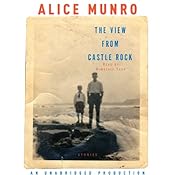
If fiction isn't your thing or you just want to learn a bit of Canadian history check  out  Pierre Berton, or Farley Mowat, or relax listening to the stories of  Alice Munro or Jane Urguhart or Miriam Toews.


Sterling Point Books: Stampede for Gold: The Story of the Klondike Rush | Pierre Berton Mowat: Never Cry Wolf | Farley MowatDear Life: Stories | Alice MunroThe View from Castle Rock (Unabridged Selections) | Alice MunroA Map of Glass | Jane UrquhartThe Flying Troutmans | Miriam Toews


There are a variety of free audio book sites online for your perusal:  

LibriVox


Tuesday, January 1, 2013

2013 Read 52 Books in 52 Weeks

Welcome to the 2013 Read 52 Books in 52 Week Challenge


Also the home of the Mind Voyages, Well Educated Mind, Inspiration Reading Project and various mini challenges.  
The rules are very simple and the goal is to read one book (at least) a week for 52 weeks.

  1. The challenge will run from January 1, 2013 through December 31, 2013. 
  2. Our book weeks will begin on Sunday  
  3. Participants may join at any time.
  4. All books are acceptable except children books.**
  5. All forms of books are acceptable including e-books, audio books, etc.
  6. Re-reads are acceptable as long as they are read after January 1, 2013.
  7. Books may overlap other challenges.
  8. Create an entry post linking to this blog. 
  9. Come back and sign up with Mr. Linky in the "I'm participating post" below this post.
  10. You don't have a blog to participate.  Post your weekly book in the comments section of each weekly post.  
  11. Mr. Linky will be added to the bottom of the weekly post for you to link to reviews of your most current reads. 
All the mini challenges are optional. Mix it up anyway you like. The goal is to read 52 books. How you get there is up to you. 

**in reference to children books. If it is a child whose reading it and involved in the challenge, then that's okay.  If an adult is doing read aloud with kids, the book should be geared for the 9 - 12 age group and above and over 100 pages. If adult reading for own enjoyment, then a good rule of thumb to go by "is there some complexity to the story or is it too simple?"  If it's too simple, then doesn't count.  

Week 1 - Journey to your imagination

stuffkit.com
Courtesy Robert Bartow
Happy New Year and welcome to Read 52 Books in 52 Weeks.  Welcome back to all those who are joining me for another round and to those who are joining in for the first time. 

Are you ready to climb the stairs of your imagination and take another mind voyage.    You can dive down into the deepest ocean, climb the highest mountain,  or blast off in a rocket that will take you to the outer edges of the galaxy.   There are no limits when you read.   I think it going to be a fun, interesting, educational, entertaining, enlightening year.  

The rules are very simple. Read 52 Books. That's it. How you get there is up to you.  We have several optional challenges which are listed in the link bar above to stimulate your imagination and help you on your reading journeys.   Also throughout the year, I'll be presenting you with random mini weekly challenges such as pick a book by its cover, your birth year or one with a certain number or color.  Challenge you to read a book in a different genre or a new to you author.    

Your first mission, should you choose to accept it, involves reading across the continents.   We are starting off the year in Canada and will eventually end up Antarctica.  Every couple months we'll travel to another continent.  You can travel along or meander your way around the world.  So put on your reading shoes, get comfortable and enjoy.  I think 2013 is going to be an amazing year and I'm looking forward to hearing all about your reads.


 ***************************************************************
Link to your most current read. Please link to your specific book review post and not your general blog link. In the Your Name field, type in your name and the name of the book in parenthesis. In the Your URL field leave a link to your specific post. If you don't have a blog, tell us about the books you are reading in the comment section of this post.